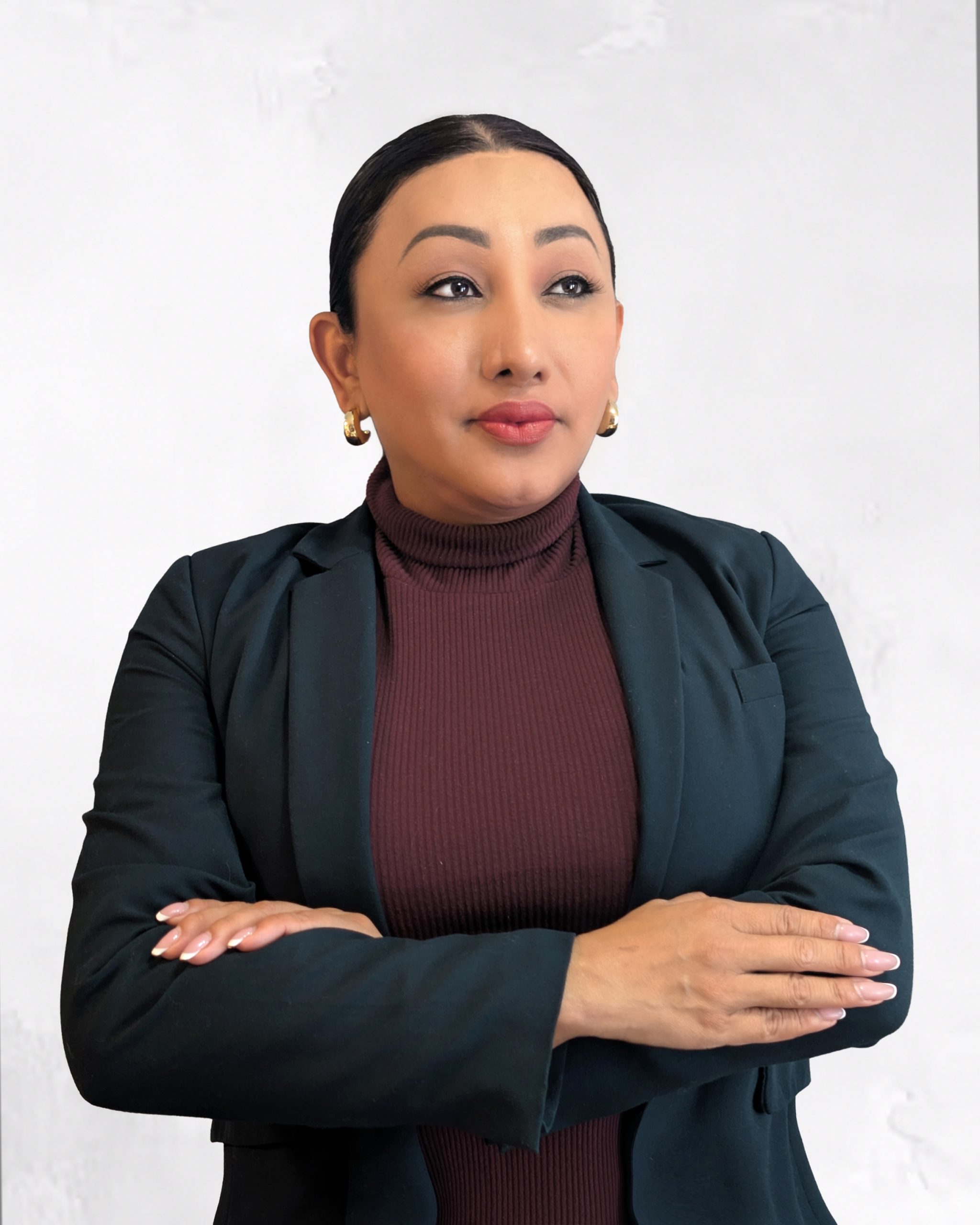
Professional Profile
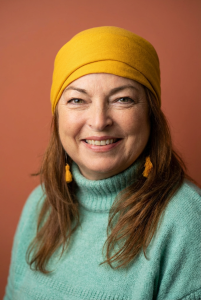
Viviana Santibañez is a trans-Latina activist and founder/director of Vivi’r LGBTQ+, a Mexican based in Toronto since 2018 who has been leading 2SLGBTQ+, refugee and newcomer communities for more than 15 years, with a particular focus on HIV. She is the first trans-Latina to serve on the boards of the Ontario HIV Treatment Network, Pride Toronto and the Toronto Police Service’s Race-Based Data Panel, and the first trans-Latina woman to be a Toronto police officer.
In 2019 she created Vivi’r, a non-profit organization that empowers immigrants through workshops on trafficking, rights, deportation and crime reporting, and that has connected more than 500 people to health and social services. A nursing assistant and specialist in community health, digital communications and immigration consulting, Viviana has collaborated with Latinos Positivos, Toronto PWA, the Hispanic Canadian Heritage Council, CAAT, the Canada Trans Summit, Ontario Cohort Studies, The 519, FCJ Refugee Centre, Centro de Habla Hispana and Toronto HQ.
Recognized as Inspire LGBTQ Person of the Year (2022), one of the 10 Most Influential Hispanics in Canada (2022) and with the Ohtli—the highest recognition granted by the Government of Mexico to members of the Mexican community abroad—she has become a benchmark for inclusion. Her work combines policy tables, frontline support and trusted information so that migrants and LGBTQ+ Spanish speakers are not only present in Canada’s institutions, but fully seen.
The first scene takes place in Houston, in the waiting room of a public hospital. In front of Viviana Santibañez sit mothers with forms, young people afraid to show a document, men exhausted after weeks of detention. She is no longer the teenager who had to explain at home why she insisted on naming herself as she is – “I am a trans person” – but she is the same one who quickly understood that her difference did not excuse her from the world; it pushed her to help organize it.
In Houston, she says, she started at the bottom: “At first I worked in basic trades, like most migrants.” Then she enrolled, continued her education – “the first in my family” – and found a method in community work: sexual health, support for detained migrants, fundraising for repatriations. The hardest moments, she admits, were accompanying families whose loved ones could only return to their country in a coffin. The most valuable lesson was discovering that, when there is a network, dignity can be sustained even in the harshest circumstances.
This story matters in the Canadian and Latino context because it explains with concrete facts how leadership is built where there were no institutions or reliable information. It also matters because it dismantles the idea that rights are won only in solemn forums. Sometimes they begin at a folding table, in a clinic corridor, in a phone call to raise funds. From that terrain, Viviana learned to move between worlds: “I sat at work tables with organizations, hospitals and authorities,” she recalls, and eventually became part of the board of directors of the Ryan White Planning Council, a large publicly funded body that provides health and social services to marginalized communities.
Her biography is anchored in a rough geography. “I come from a very difficult and dangerous region in Mexico,” she says, referring to the Tierra Caliente area between Michoacán and Guerrero. The early awareness of her identity – “I’m Mexican… and I’m a trans person” – did not have an immediate celebration at home. “It wasn’t easy for my family to understand,” she says quietly. Her response was to move. In the United States, working life began, like that of so many migrants, with survival jobs. The turning point came with education and volunteering: putting her body into networks that connected hospitals, NGOs and public offices, learning institutional grammar without losing the pulse of the community. Houston’s experience left her with a habit: turning pain into organization.
The move to Canada rearranged the pieces. Toronto was, at first, an outlet and a question mark. “I was alone and with very little information,” she recalls. She chose a first route: lawyers, and understanding the refugee process. She was not starting from zero. She brought “a history of activism” and “proof” of her previous work in the United States; that file, she notes, helped expedite her claim. But papers do not automatically close the gap. In Toronto, Viviana realized something both obvious and disconcerting: “There was almost no information or organizations that worked with the Latino migrant community and even less with the LGBTQ+ community.”
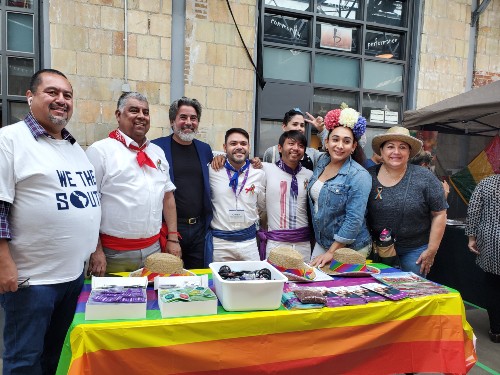
The answer echoed Houston, but with a new context: gather people. The seed was six or seven people around a table. Over time, that small circle took the name Vivi’r LGBTQ+ and sharpened its focus: accompanying immigrants, asylum seekers and refugees in Toronto, especially those who are Latin American and 2SLGBTQ+. It was not easy. “We had to fight for legal recognition, to show that we existed and that we were necessary,” she explains. The phrase is key: to exist, here, is not simply a fact; it is an administrative conquest.
To confront the information asymmetry that punishes newcomers, Viviana took another step: “I trained as an immigration consultant to have the same level of preparation as those who charged the community and, many times, scammed them.” Her goal was not to open a lucrative private practice, but, as she puts it, “to offer truthful information and real accompaniment.” Truth, in her hands, becomes a public service: plain-language explanations, realistic timelines, and the courage to say “no” when someone promises impossible outcomes.
Viviana’s leadership is not driven only by identity slogans; it is a chain of decisions. From a young age she understood that being a trans woman would place her on the margins. She chose to use that vantage point to see more clearly: to identify where information was missing, who was being scammed, which door no one ever knocked on. That is how she read the Canadian scene: a system with clear rules that becomes opaque for people arriving without language, network or time. Her method was familiar—link small actions that produce concrete change: a WhatsApp group that becomes a lifeline, a guide in Spanish that prevents fraud, a workshop that clarifies a procedure—until, together, they create structure.
Her advice to those who arrive with “big dreams” is deliberately practical. “First of all: make short-term and long-term plans,” she says. The short-term plans are operational: “having a safe place, stability and orientation.” The long-term plans are about meaning: “How do I want to live, what impact do I want to leave, what difference do I want to make?” In those verbs, an ethic is condensed: measuring the day and measuring a life at the same time. She adds another uncomfortable truth: many of us study certain careers “out of obligation or fear of discrimination.” Migration, she suggests, can be a chance to reinvent yourself. “What is it that I always wanted to do and never could?” It is not an invitation to a blind leap, but to authenticity with a plan.
The Latin thread in her story is not decorative. She translates it into two words: resilience and solidarity. “As Latinos we know how to survive adversity, support each other and not forget where we come from,” she says. That memory accompanies her when she sits down with authorities to argue for recognition of Vivi’r LGBTQ+, when she builds a calendar of legal appointments, when she explains to a newcomer the difference between a shelter and a shared room. Her leadership is, in that sense, a leadership of proximity: it does not promise to transform the system overnight; it works to stop the system from devouring those who arrive most unprotected.
The obstacles she names are specific. In the United States: precarious work, mourning, the fear that comes with detention and deportation. In Canada: loneliness, cultural dislocation, a near total lack of information in Spanish, and targeted scams aimed at migrants with few defenses. On both shores, she saw how easily desperation can be exploited. Her response was to build antibodies: an evidence file of activism to support her refugee claim; technical training so she would not have to rely on dubious intermediaries; and a support network sturdy enough to share the load. Each step left a replicable lesson: what works for one person should become a guide for another.
The achievements she mentions draw a clear outline of impact. In the United States, she continued her studies as the first in her family to do so; worked in sexual health; accompanied migrant families and detainees; organized fundraising for repatriations; sat at roundtables with organizations, hospitals and authorities; and served on the board of the Ryan White Planning Council, working with city and state-funded programs that provide health and social services. In Canada, she assembled a documented record of activism for her refugee process; created and consolidated Vivi’r LGBTQ+ as an organization serving immigrants, asylum seekers and refugees, with a focus on Latino and 2SLGBTQ+ communities; trained as an immigration consultant to provide reliable guidance; and has advocated for legal recognition and visibility for migrant communities across multiple boards and advisory panels.
Her trans identity crosses her practice without being the only headline. It is not an isolated flag; it is a lens that allows her to see shadows others may miss. Hence her insistence on the “long plan”—what impact do I want to leave?—and the “short plan”—a safe place as the first objective. For someone who grew up in a violent environment, both a roof and a name are public policy. For someone who had to explain her identity again and again, words matter deeply. Saying “we exist” is not a slogan; it is a procedure that must be won in institutions and in law.
The closing of her story avoids easy moral lessons. Viviana does not attribute her path to innate charisma or to a perfect country. She describes a sequence instead: arriving alone and without information; turning to lawyers; backing up her account with evidence; detecting an institutional absence; gathering six or seven people; fighting for recognition; training so she could guide others; and growing a network that now includes hundreds. If there is one thing that sums up her philosophy, it is a refusal of resignation and empty epic. Neither victimhood nor neon lights: work and community.
“We have a voice that deserves to be heard,” she says. Her way of honouring that voice is to make it useful: turning her own journey into pathways for others, so that the next person sitting in a hospital waiting room, or at a kitchen table in Toronto, does not have to start from nothing.