Professional Profile
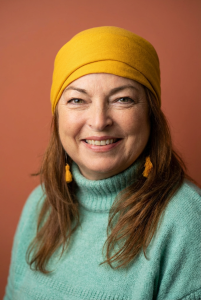
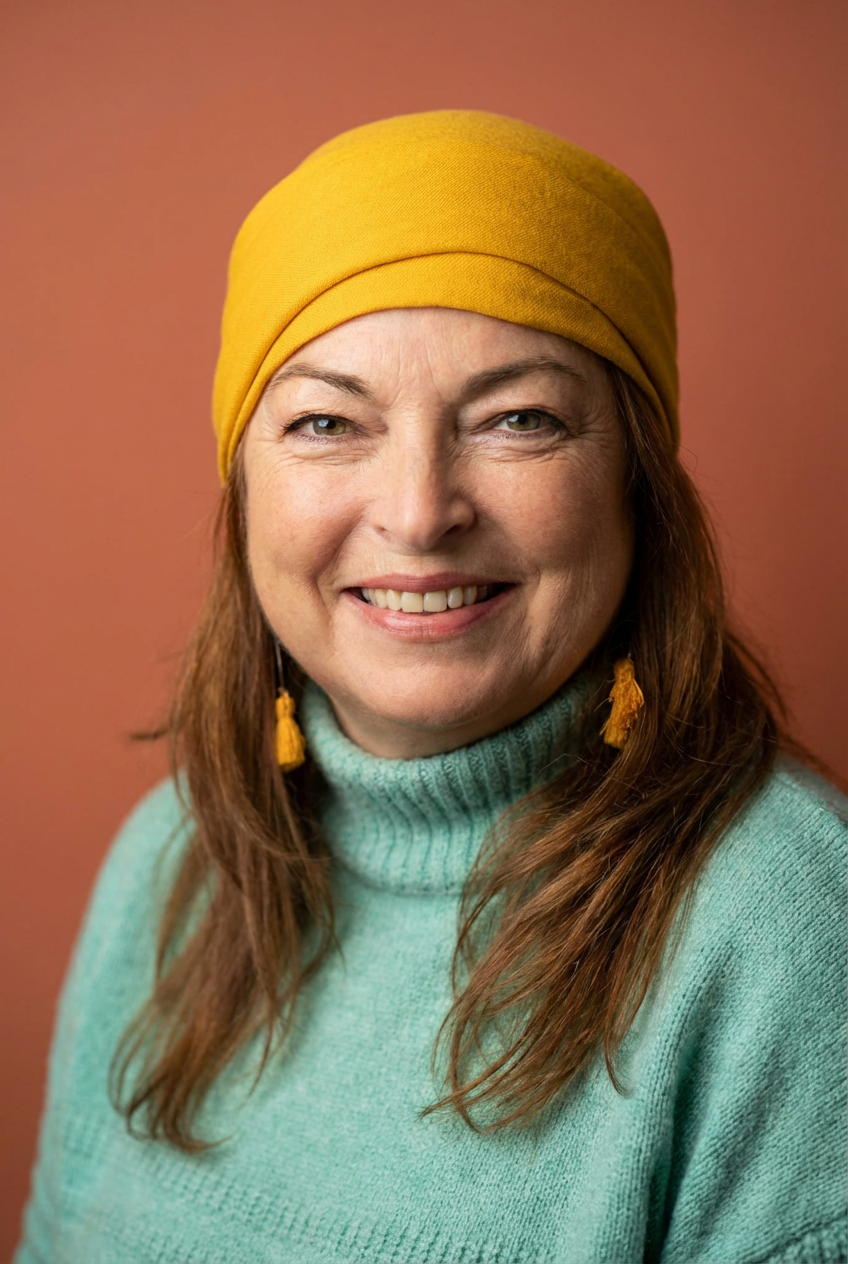
Sinara Rozo is a Toronto-based curator, cultural manager, and audiovisual and installation artist. She arrived in Canada in 1995 and has since dedicated her work to building exhibition spaces that are accessible, diverse, and grounded in care for both audiences and creators.
Her trajectory spans early grassroots festival production, the consolidation of an inclusive curatorial lens at alucine, and an artistic practice that explores what often remains unseen, including the realities of care, time, and invisible illness. Across these roles, she emphasizes affordability, clear programming intent, and fair labor practices as the foundations of a healthy cultural ecosystem.
Entering a country with only the essentials can seem like a small gesture. Sometimes it is the beginning of a life. Sinara Rozo remembers arriving through Buffalo by bus, “with a backpack, four changes of clothes and a pair of shoes,” driven by a simple invitation: to help organize a festival that, at the time, was barely an idea. She had studied Social Communication and produced video in Caracas, the city where she grew up after migrating from Colombia with her family during a period of violence, she recalls. In Toronto, a small Latin film collective led by Jorge Lozano was waiting for her, determined to create a space for cinema from the region. There was no office, “a little windowless hole,” she says, no grants, and no budget. What there was instead was conviction and a way of working: collaborative, handcrafted, steady.
That first chapter was called Crossing Borders. With a borrowed PC and long-distance communications that were expensive at the time, they stitched together a program by contacting filmmakers by fax. Nothing fell outside the work plan: design materials, production, logistics, hospitality. On Sundays, after closing, they hosted a homemade brunch for participants and volunteers, and Sinara made arepas. It was, as she describes it, a labor of love, and a practical school of curation and production built with few resources and a great deal of discipline. At the same time, the city taught her another lesson: the possibility of moving at night without fear, of inhabiting a tangible diversity, and of finding culture as a meeting ground. That combination, everyday safety and pluralism, became her first emotional anchor in Toronto.
The “big festival” that dazzled her early on, she remembers it as PRIME, associated in her mind with the Images Festival circuit, expanded her frame of reference: there was room for languages and bodies that never reached commercial screens. In that scene she learned that a Latin American festival in Canada could be more than a showcase. It could be a space for risk, discovery, and conversation with other communities. For three years, she entered the country on a tourist visa while contributing to that initial construction. Looking back, the period was precarious and foundational at once.
The next movement carried the name alucine, a platform where, over time, she consolidated a curatorial vision of her own. Her focus, she says, is inclusive: each edition integrates works by queer, trans, Indigenous, and racialized creators, with an emphasis on independent production. She defends the short film as a format that enables experimentation and first screens. And she treats access as policy, not as an afterthought. That is why she insists on family-friendly prices and a pay what you can option so no one is excluded for economic reasons. She thinks of families with three children and two adults, and what it means to go to the movies when cost becomes a barrier.
Her curatorial work grew alongside training in management. “I trained here as a cultural manager,” she says plainly. She learned to run teams and processes by doing, professionalizing budgets and schedules, and separating personal taste from programming criteria designed to speak to diverse audiences. There was also a time to pause: she went back to school for a master’s in film production and became the mother of two children. When she returned to alucine, she found a ten-day festival centered on experimental cinema. She says she chose to reorient it: she diversified formats, documentary, fiction, animation, children’s cinema, and feature films, shortened the calendar to five days to concentrate energy and attendance, and created a program for children, which she recalls as Shorts for Shorties, convinced that building audiences begins by opening the door to children with carefully curated offerings.
In parallel, she kept her personal artistic practice active. Recently, she says, she premiered What It Takes to Live, a multichannel installation with sculpture and medical objects that reflects, with restraint, on the experience of an invisible illness: kidney failure. The piece explores the everyday reality of dialysis three times a week while also sustaining emotional and professional life when, externally, it looks like nothing is wrong. The deeper question is how care is given and received when symptoms are silent and treatment consumes hours. Exhibited in a Toronto gallery she identifies as A Space, with a closing conversation on a specific date, the work focuses on what is often left out of the frame: the domestic labor of the body, time, and resilience without spectacle.
Her reading of the cultural field is concrete and hopeful at the same time. On one hand, she argues that the output of Latin artists in Canada is remarkable. “There’s a boom,” she says, in short films, features, music, and visual arts. On the other hand, she observes that the exhibition and distribution circuit dedicated specifically to Latin art remains small. She does not frame it as stigma. She speaks of invisibility instead: “They haven’t discovered us,” she summarizes. She also notes shifts in public funding linked to unavoidable agendas, including reconciliation processes with Indigenous peoples and anti-racism policies, which in certain periods have prioritized those lines. Without disputing the underlying purpose, she calls for expanded opportunities to include diverse communities in a sustained way, including Latin and Asian communities, so that the cultural conversation is not a set of sealed compartments but a complete map.
Her critical eye also asks for accountability within the community itself. Without pointing to anyone in particular, she shares her hope that the Latin ecosystem in Canada will strengthen fair labor practices and real support networks for those who arrive with professional training. In her experience, cohesion is built daily: paying for work, opening mentorship pathways, and avoiding a model where Canadian experience depends on indefinite volunteerism that ultimately precarizes. Her comparison to other diasporas, such as the Brazilian community, which she perceives as highly organized, is not meant to compete but to learn: pool efforts, celebrate others’ achievements, and show up for the rough patches.
A thread keeps returning in her story: access. Access to a first screen, a first conversation with an audience, a first credit. Access as pricing policy, and also as atmosphere. At alucine, she says, the room is cared for so different identities feel welcome: queer and trans people, Indigenous peoples and racialized communities, parents with children, first-time viewers who attend out of curiosity. That care runs through tangible decisions, including timing, translations, venues reachable by public transit, and a way of working grounded in internal equity, clear communication, and external hospitality. The goal is not to please everyone, but to allow more people to find a story that resembles them or opens a window.
When she speaks about the future, she avoids clichés. She recognizes the financial pressure on the cultural sector and the challenges facing those who migrate today. At the same time, she insists that progress is earned through persistence and networks: partnerships among organizations, audience development, work with schools and libraries, and stable supports that allow projects to grow without losing identity. She imagines an ecosystem where Latin cinema in Canada stops being perceived as a niche and is understood as part of the country’s broader cultural conversation, where premieres are not isolated events but stations along a longer circulation path.
Returning to the origin, in her case, is not nostalgia. It is a reminder of method. That festival built with faxes and arepas taught three lessons that do not expire: horizontal work, demanding programming, and hospitality. With those materials she built her curatorial practice at alucine: defend the short film and independence as fertile ground, expand the repertoire without abandoning rigor, and think of the audience as community, not as market. With those same materials she sustains her artistic practice: telling what is not seen, silent illness and care, without melodrama, with precision and respect.
Nearly three decades after that bus ride, Sinara Rozo still imagines the screening room as a long table. A table where Latin cinema fits in all its forms, industry and independent, short and feature, where audiences recognize themselves and expand, where diversity is not brochure language but daily practice. Her contribution, told in her voice, does not seek a moral. She prefers the verb in the present: to do. To run screenings, to build networks, to make work. And in doing so, to keep a light on that someone else can use as guidance.