Professional Profile
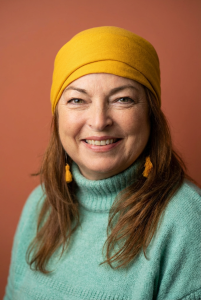
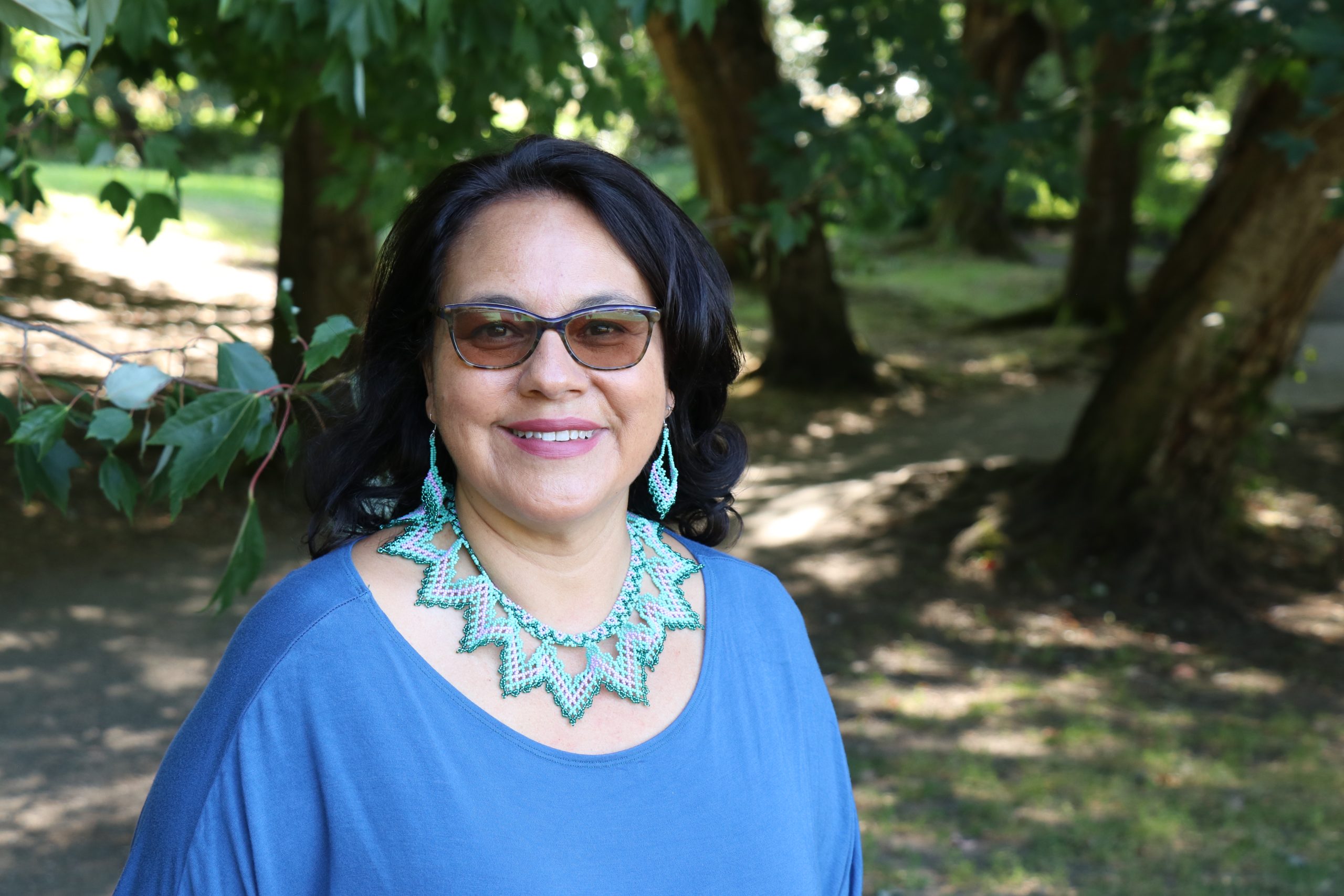
Paola Ardiles is a social innovator in health and a professor at Simon Fraser University. A Chilean-Canadian, she promotes collaborative and decolonial approaches to health promotion and education that place equity and mental well-being at the center of policy and practice.
She is the founder of the Bridge for Health cooperative and co-designer of the Health Change Lab, which connects students, cities and organizations to co-create wellness solutions. Ardiles leads participatory research initiatives such as Art on the Go, engaging young newcomers in road safety policy, and studies on the exclusion of foreign-trained medical professionals from Canada’s health systems.
Advising the Vice-Chancellor’s Office for People, Equity and Well-being at SFU, she has been recognized with the Dr. Nancy Hall Public Policy Leadership Award (2012), the Women in Business – Social Trailblazer Award (2017), the Inaugural West Coast Canada Teaching Excellence Award (2022), the Warren Gill Community Impact Award (2022), and as one of the 10 Most Influential Hispanics in Canada (2017). Her work integrates social innovation, equity and community mental health.
It began with a flight. Paola Ardiles remembers the clouds outside the airplane window and the unlikely mix of silence and sobbing inside the cabin. She was five. Her family was fleeing the Pinochet dictatorship in Chile. While she celebrated the novelty of travel, many adults were crying, unsure whether loved ones, including political prisoners, had managed to escape. That mixture of joy and fear was her entry point into Canada, first in Toronto. It would shape the tone of a professional life that refuses both naive optimism and hopelessness, and instead insists on a public health agenda that sees people as biographies, not just diagnoses.
Her story matters in the Canadian and Latin American context because it combines three domains that are often treated separately: the memory of exile; teaching and research; and institutional leadership focused on equity and well-being. Ardiles does not see these as separate lanes. Her identity – “my family history and my Latin American heritage guide the way I teach, do research, and lead my work,” she says – operates as a methodology: asking where we come from to decide why and for whom a public policy is designed.
The origins set the frame. Born in Chile, her family left after the military coup. Politics was never a distant noise in their home; it shaped time and affection. Chilean medical and social thought left a strong imprint. She often recalls that Salvador Allende, beyond being president, “was a physician specializing in social medicine.” That tradition grounded what is now taught as the social determinants of health: health is not settled only in a clinic but also in housing, neighbourhood safety, food, income and working conditions.
That conviction became practical in her first job. Ardiles worked as an interpreter at a community health centre in Toronto. There, she learned to listen to what does not fit neatly on a medical form. Patients arrived with “physical pain,” but in her observation “more than 90%” were carrying trauma, grief and anxiety: violence, discrimination, uprooting. What appeared as back pain or gastritis was often the body’s language for forced migration or chronic poverty. The conclusion was clear: suffering could not be addressed only from the clinic; it needed community and structural responses.
Over time, her focus expanded. In addition to teaching and research, Ardiles took on an administrative role at Simon Fraser University, leading institutional strategies on equity, diversity, inclusion and well-being. It was not a career detour but a continuation: equity is not a slogan if it reshapes structures, budgets and everyday decisions. In her classrooms she begins where many courses end. “I always reflect on my roots,” she explains. Knowing who is speaking – and from where – keeps public health from becoming an abstract set of indicators. Her method is simple and demanding: ask in advance who is being left out, which barriers remain invisible, what the costs of exclusion are and where there are opportunities to co-create solutions with communities.
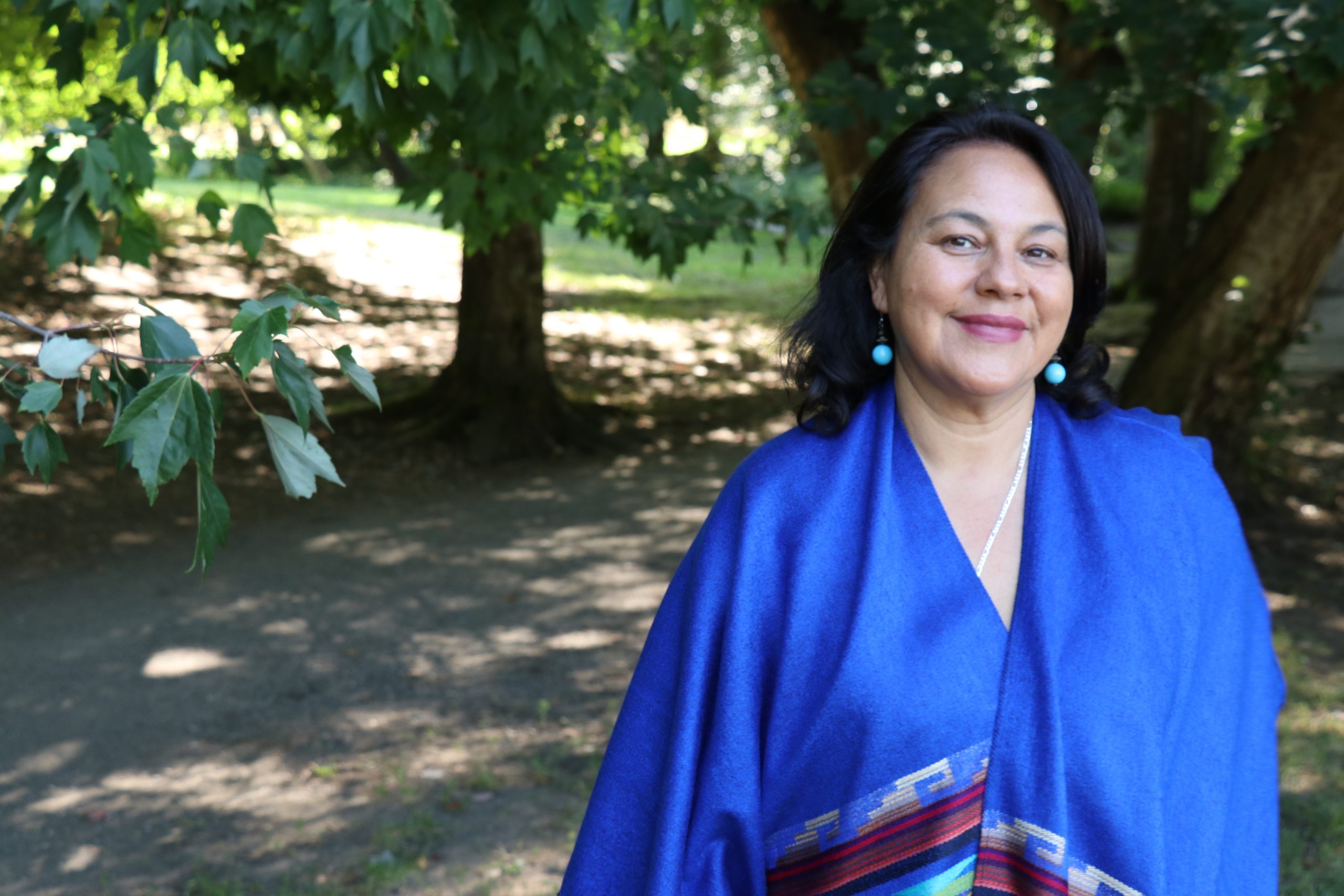
The Canadian institutional map also introduces asymmetries that concern her. “In Canada, health services are the responsibility of the provinces,” she notes, which translates into tangible differences. Ontario, for example, has more specialized services for immigrants, while in other provinces the offerings are minimal. These gaps weigh most heavily on those who arrive without networks or language. When migrants do not receive timely mental health support, “their situation often escalates to hospital emergencies, with enormous human and economic costs.” The thesis is blunt: the cost of not investing early is higher than the cost of prevention.
The migrant thread runs through everything. Ardiles does not treat her biography as an excuse, but as a lens. Having arrived on an exile plane, having translated stories in waiting rooms, having seen how trauma hides behind physical symptoms, all of this fuels her defense of an often neglected priority: “putting mental health and well-being at the center, because they are the ‘orphans’ of public health.” What is pushed to the margins – loneliness, grief, depression – multiplies emergencies and expenses later. For her, addressing the invisible first is both the most honest and the most efficient form of care.
That same logic informs her networking work. In recent years, alongside her role at SFU, she has devoted energy to connecting people and teams. Her preferred verb is to accompany. “I always ask, ‘How can I help you, who do you need to connect with?’” she says when advising young women arriving in Canada. Loneliness, in her view, is not only emotional; it is a public health issue. “Isolation generates loneliness, and loneliness directly affects mental and physical health.” The answer cannot be purely individual. “We need to create support networks so that newcomers feel accompanied.” She points to the example of a “ministry of loneliness” in the United Kingdom as both warning and inspiration: what is not named cannot be prevented.
Her leadership, therefore, is not limited to publishing papers or drafting programs. From a young age, she participated in “protests, lobbying and projects” aimed at promoting democracy and human rights in Latin America. That practice reinforced a lesson she now brings explicitly into health: sustainable change requires strategy and affection; it needs data and, at the same time, relationships strong enough to sustain long-term efforts. That is why, when she thinks about legacy, she speaks less about specific initiatives and more about a horizon: “we all have a role.” No one needs to become a specialist overnight. The first step is to recognize the problem; the second is “to look for tools to support others and oneself.” The metaphor she uses is familiar: “as they say on airplanes, you have to put on your oxygen mask first to be able to help the person next to you.”
Looking at Canada’s Latino communities, Ardiles notices shifts. “When I arrived in Vancouver it was rare to hear Spanish on the street; today it is common everywhere.” Growth brings challenges – more internal diversity of countries, histories and politics – and opportunities: increased presence in art, academia, politics and more. Her recommendation has two parts. Inside the community, “strengthen networks and support each other to make our contribution visible.” Outside, resist simplification: there is no single story that fits into one “little box.” Diversity, if taken seriously, is a comparative advantage.
Her Chilean identity is not nostalgia; it is a compass. Allende, public health and the notion of social determinants offer a framework that pushes against inertia: budgets that ignore housing and employment as health issues; systems that confuse dealing with crises with providing true coverage. The Latin American heritage that “guides the way” she teaches and researches is translated into a clear program: without investment in well-being and mental health, there can be no equity. And without networks – family, community, scientific and cultural – public policy remains a promise with no one to implement it.
The story closes where it began, but with a different light. The little girl who watched clouds while adults cried now responds to uprooting from lecture halls and institutional corridors: naming pain so it has a place; moving resources from repair toward prevention; teaching students and colleagues to start with the biography, not just the spreadsheet. There is no neat moral, just a method: ask who we are, why we are doing this work and who still needs a seat at the table. And there is an invitation she repeats to those just arriving – and that also applies to institutions: seek contacts, ask for support and never walk this road alone.