
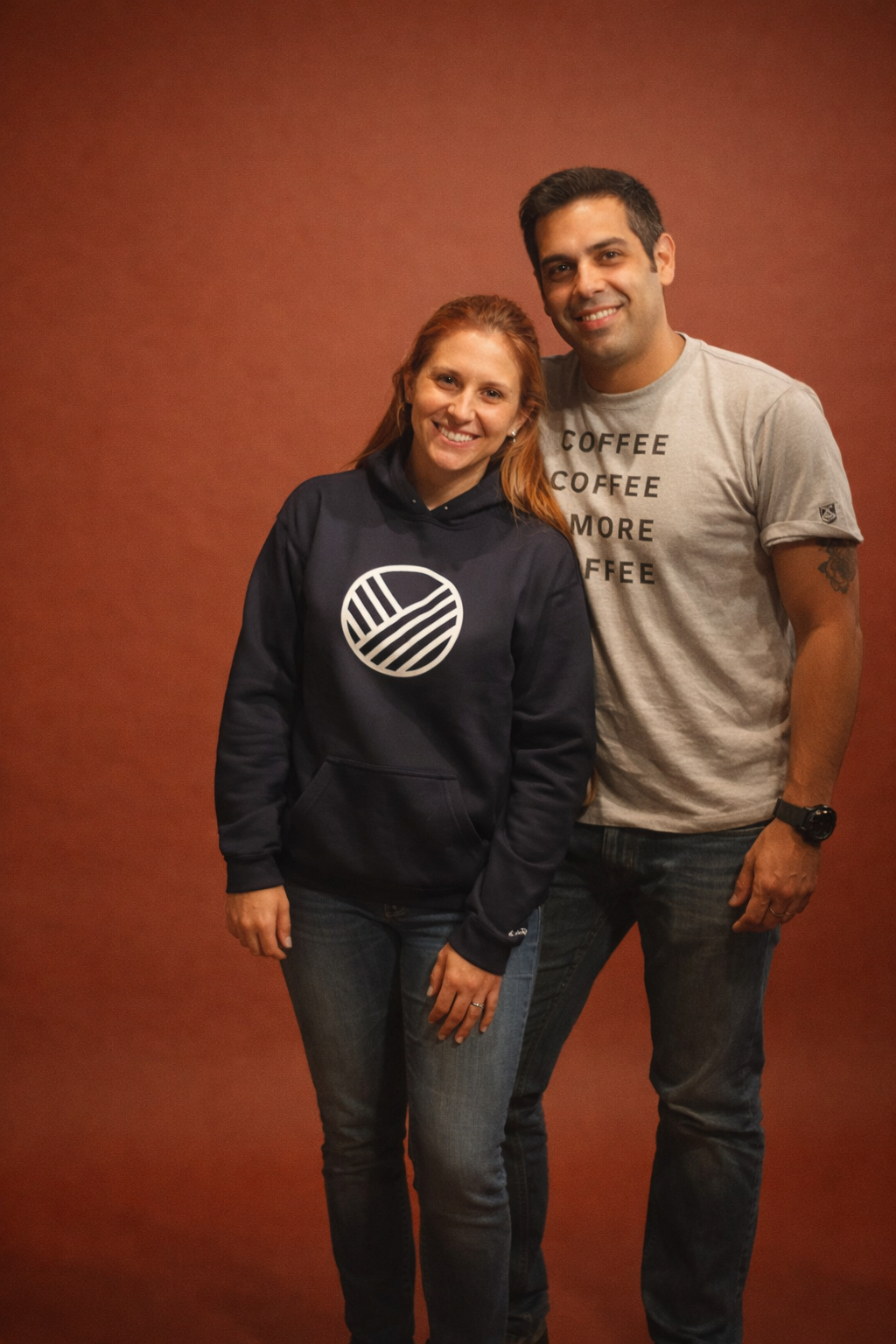
Professional Profile
Laura and Juan are Colombian entrepreneurs based in Toronto, Ontario. They built their venture from the ground up, navigating regulatory hurdles, long operating hours, and the financial pressure of starting without margin, while raising a young daughter.
Their leadership combines operational discipline with a community-first mindset: clear standards, consistent service, and the belief that a business grows when it becomes a place where people feel seen. Over time, their work has earned community recognition and expanded into multicultural teams shaped by the same principles.
Sometimes the beginning of a new life fits inside an itinerary with precise dates: March 12, landing; March 13, the first appointment to see the space. Laura and Juan had made a promise on the plane: no shortcuts, no backdoor routes, everything by the book. They were coming off years of paperwork and a long residency process, and of holding onto an idea that had already taken root back in Colombia: turning their craft into a business built with purpose and method. They had seen the space months earlier, while still waiting for confirmation. If it was still available, it would be their first bet. It was still available. The door opened. And then the real work began.
The scene was not epic. It was stubborn. Before thinking about recipes or cash flow, they had to decipher a system that demanded permits, signatures, plans, and repeated visits to offices that contradicted one another. “They told us three times we didn’t need a permit… and then an inspector came: yes, you do,” Juan recalls. The cost of doing it right was time, money, and above all, uncertainty. The city required upgrades far beyond their budget. They had not even opened, and they already felt bankruptcy hovering.
Relief came from an unlikely ally: the landlord, who stood in front of officials and summed it up in a line they still remember. Here you have two young immigrants who want to work and create jobs. Why put obstacles in their way. After meetings and corrections, several demands were dropped. The lesson stayed with them: here, too, you have to insist on your rights, and respecting the rules does not mean giving up your voice.
That first year was seared into memory. Although they took possession of the space on April 1, they could not open until September 9. It was not construction. It was the learning curve. To that delay they added a material reality: without credit history, with modest cards, every expense weighed twice as much. There was no room for staff or coverage. They had to do everything.
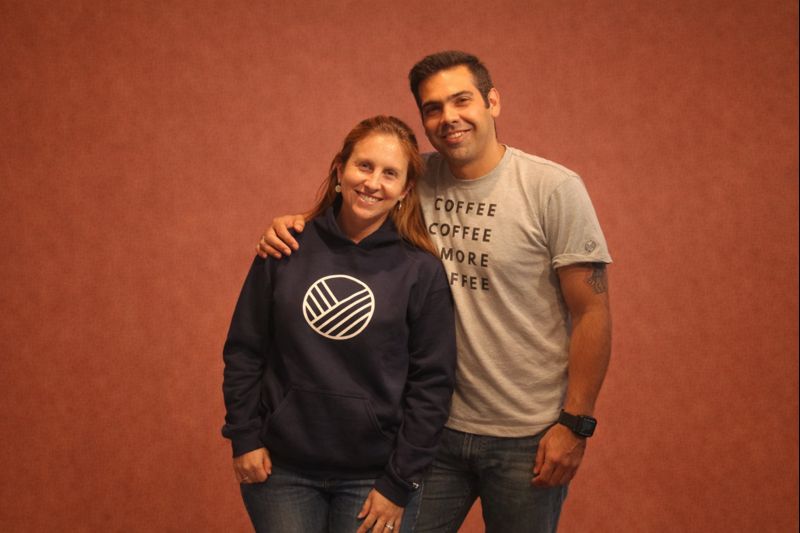
They organized life like a strict choreography: one opened before dawn and worked until noon; the other took their daughter to school with the only car, returned to cover the afternoon shift; they switched to pick her up; went back behind the bar; closed at eight at night. “It was just the two of us. We couldn’t afford employees,” they say. That rhythm lasted about two and a half years.
The craft hardened through repetition. Laura learned the bar with the urgency of someone who cannot fail. In the early days, when Juan left her alone for a few hours, a regular customer, now a friend, told her frankly: I know you’re doing your best, but I like the coffee better when Juan makes it. It landed like a slap and a compass: practice, correct, insist. She began to measure milk by ear and read crema by its sheen. She missed less, gained steadiness.
Their daughter grew up between grinders and regulars: napping in a stroller beside the counter, helping with trays, learning names and greetings. The shop became a weave: familiar faces, intersecting stories, a network that held more than finances ever could. “The community we built with that first location is what made us survive,” Laura says.
Not everything was endurance. There were confirmations that, without changing the balance sheet, gave the effort meaning. They recount that in the first year, a local newspaper granted a Reader’s Choice Award for best coffee, voted by the community. Later, the region’s tourism office recognized them in the same category, also by open vote. For them, those recognitions were not trophies. They were proof that the daily choices, careful work, clear explanations, greeting people by name, were turning into trust.
They carried identity into the space and into the way they treated people. Laura remembers hanging a sign with the word Colombia and feeling, not marketing, but pride. Their concept came from a desire to make the value chain visible and to protect service as a non-negotiable. In their business, service is a pillar, at the same level as quality. They have worked with baristas from many countries, and they apply the same standard to everyone: attentive care, clear explanations, warmth without intrusion.
Their advice to newcomers is direct. Find mentors. Invest in professional guidance when needed. Do not assume the system is flawless. Document everything. Insist respectfully when instructions conflict. And do not confuse doing things correctly with staying quiet. In their story, the difference between stopping and continuing often came down to a small decision: ask again, show the paper trail, demand clarity.
The tension between adapting and preserving what is yours appears again and again. Learn the language, respect the rules, understand how things work here, without imposing your culture of origin on the environment. And at the same time, do not let go of the music, the flavors, the names that name you. That balance also guides how they raise their daughter: pride in Spanish and pride in origin, without turning it into a wall.
When asked which values carried them through the hardest stretch, they answer without grand statements: persistence, resilience, hard work. They add service: eye contact, gratitude, quick correction, owning mistakes. And one conviction runs through everything: do not give up. “There was no room to give up,” Juan repeats.
This story could end neatly with a moral, but Laura and Juan avoid narrative shortcuts the same way they avoided practical ones. They prefer to leave a method. Define why you came and hold on to that reason when winter hits and money is tight. Adapt what must be adapted, language, procedures, ways of relating, without losing identity. Ask for help, pay for professional advice when it is essential, and get everything in writing. Surround yourself with people who add. And turn your shop, whatever your trade, into a place that truly builds community. The rest comes later, if it comes at all. What holds everything up is the day-to-day: the work, the greeting, the consistency.