

Professional Profile
Cristina Flores is a Mexican born leader whose career connects women’s sport, community safety, diplomacy, and economic bridge building. Raised in an intellectual household in Mexico City, she arrived in Canada very young and quickly discovered that sport and public service could become pathways to belonging.
In Canada she discovered rugby and helped organize one of the first women’s teams at her university, learning to convene, plan, and lead in spaces where women had rarely been seen on the field. Beyond sport, she has volunteered in hospitals and with the police in Hamilton, bringing cultural sensitivity to work with victims of violence and helping translate between institutions and diverse communities.
Internationally, Cristina has held diplomatic roles and collaborated with the Canadian Council for the Americas, helping organize forums on trade and investment between Canada and Latin America. She now contributes to the Canadian International Council, Toronto Branch, serving on the executive committee and helping convene expert discussions on Canada’s role in the world. Across these arenas, she promotes a culture of belonging that combines discipline and warmth without giving up her Latin identity.
On one side of the field, wet grass and cold air announce the start of training. A student tightens her laces, looks at her teammates, and raises her voice to set the line. There is no packed grandstand or floodlights. There is, instead, the quiet conviction of making room for something that, until then, barely existed for women in her environment. Cristina Flores remembers that inaugural gesture: in Canada she discovered rugby and helped organize one of the first women’s teams at her university, an experience that gave her a bodily language—play, strategy, contact—for what would later become her style of leadership.
Her story matters because, without grandstanding, it embodies the concrete promise of cultural mobility: a young woman who arrives from Mexico City with a complex family heritage and turns integration into everyday practice. It also matters because it shows how passion and rigour come together—that mix she attributes to a “Latin character” and to the discipline she learned from her father—across spaces that run from the pitch to public service: hospitals, community policing, diplomacy, scholarship and artistic exchange programs driven from consulates, especially the one in Quebec, and sustained work with the Canadian Council for the Americas, where, as she recounts, they organized discussion forums on investment and trade between Canada and Latin America.
Cristina did not arrive in Canada from a vacuum. She comes from a family marked by twentieth century history. Her mother, Czech and Jewish, emigrated during the Second World War. Her father, Mexican, was an academic and became Secretary of National Heritage in Mexico. That home full of books and conversation left a mark. “I grew up in an intellectual environment, with the value of reading, education, and debate always present,” she says. That base did not turn into solemnity; it became an ethic: speak with arguments, listen, sustain disagreement with respect.
When she arrived “very young” in Canada, the sense of wonder was immediate. “It was everything Mexico was not,” she sums up, without disparaging her origin but highlighting the contrast. One of the most concrete discoveries was sport: seeing women practise disciplines that, in her previous context, were not common. Rugby appeared there as a revelation. The game offered her a place to understand her own strength as something shared: tackles that require technique and trust, passes that depend on reading the other, lines that open up through coordination.
On those fields, Cristina learned to convene, to distribute responsibilities, and to sustain a team that was not yet “given” for women. It was not a symbolic gesture; it was organization—schedules, permissions, resources—and persistence. Her Latin identity, she says, was part of the fuel. “Latin passion has been key,” she affirms. But she does not confuse enthusiasm with disorder. “Always with discipline,” she adds, “something I also learned from my father.” That equation—warmth and rigour—became her signature. In professional and community spaces, her way of getting involved combines closeness and method: opening up her home and conversation, but also setting clear rules of the game.
The path that followed goes far beyond the field. Cristina has volunteered in hospitals and with the police in Hamilton, where she contributed cultural sensitivity to work with victims of violence. That detail is not minor. On those shifts, as she tells it, you learn to translate between worlds: to understand family codes, shades of fear, silences that speak. Cultural mediation is not taught only in manuals; it happens in hallways and waiting rooms, and it demands a mix of empathy and structure. That work familiarized her with the most fragile aspects of community life and, at the same time, gave her tools to intervene with care.
Another strand of her work has been international. Cristina has held diplomatic positions and collaborated with the Canadian Council for the Americas. There, far from an abstract rhetoric about “links,” she worked, as she recounts, on organizing discussion forums on investment and trade between Canada and Latin America. These brought together trade ministers and senior executives from various countries with ministers and representatives of the Canadian financial sector—for example, from Scotiabank or Barrick Gold—often starting practically from scratch.
The exact figures and titles are not recorded in the interview, and for that reason it is prudent to be cautious. What does emerge clearly is the type of impact she seeks: projects where knowledge, resources, and prestige circulate in both directions. She is currently part of the Canadian International Council, Toronto Branch, where she serves on the executive committee and helps organize expert forums on Canadian foreign relations. The stated goal is to strengthen Canada’s role in international affairs, considering issues that span academic disciplines, policy areas, and economic sectors.
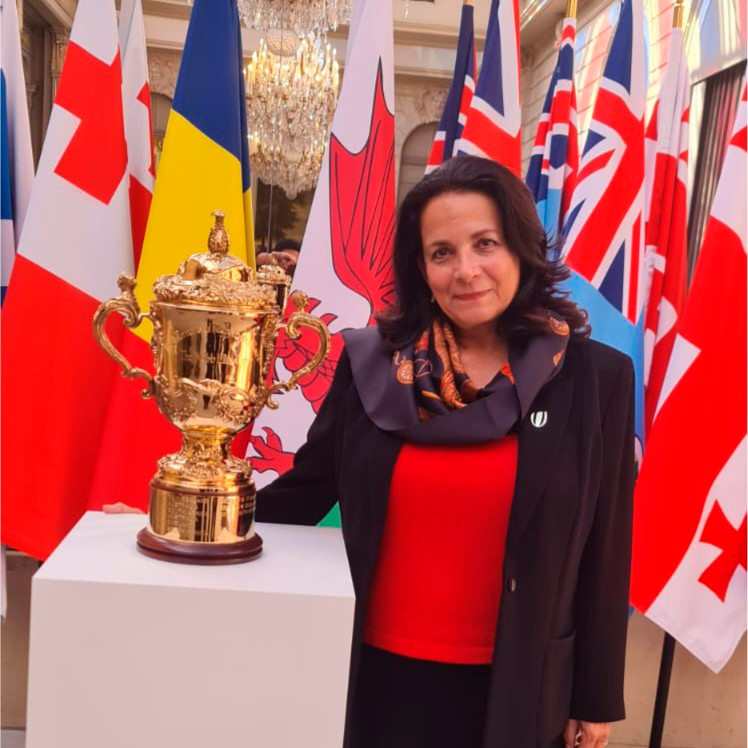
Migration, however, was not a straight line. Cultural adaptation involved negotiation. “I learned to moderate how I speak and to be more concise in Anglophone spaces,” she admits. Adjusting the pace and length of what you say does not mean giving up your own voice. On the contrary, Cristina insists that she did not want to change completely. She preferred to propose a middle ground: that the environment also move toward her style, “warm, opening the house and including everyone.” In a country that sees itself as multicultural, asking for reciprocity—that adaptation be a two way process—is, in her view, a form of respect.
That tension between adjustment and staying true to herself is at the centre of her message to Latin American girls in Canada. “Take advantage of every opportunity, even if it’s scary,” she says. She does not romanticize the process. “Many times I cried or doubted,” she confesses. That fragility does not diminish the decision; it makes it honest. Her recipe includes two complementary imperatives: discipline and joy. “Keep learning” and, at the same time, “do not lose who we are: singing, laughing, inviting people in, sharing with care.” In her synthesis, “being Canadian and being Latina are not mutually exclusive.” It is not a slogan; it is a practice you can see in how she builds teams, designs projects, and welcomes people at her table.
When she is asked what she would say to the Cristina who had just arrived, the advice moves away from quick success. “Appreciate every moment, even the difficult ones,” she says, “because they all bring a lesson.” Her final line—“life is giving her more than she imagines”—is not a self help phrase. It is a form of gratitude that looks backwards and forwards at the same time. There is an ethic of time there: not erasing the harshness of the path, but drawing from it a form of character.
The obstacles she went through have left concrete marks on the way she organizes. In rugby, she had to explain why and how. In community service, she learned not to colonize other people’s experiences. In diplomatic work and in the Council, she learned to translate diverse interests without diluting substance. In all of these scenes, the mix of warmth and rigour appears again: hospitality that brings people together and structure that protects them. If anything captures her leadership, it is that double fidelity: to people and to process.
In the Canadian and Latin American context, Cristina’s story offers a sober reading of belonging. It is not about “integrating” as dissolution, nor about “preserving oneself” as isolation. It is, she suggests, about reciprocal movement: bringing into public space ways of relating that come from a heritage—“singing, laughing, inviting”—and, at the same time, incorporating tools—concision, protocols, program design—that allow those ways of relating to scale up and endure. The result is not an abstract “mixed identity,” but a way of being: able to play and to manage, to sustain an embrace and to draft an agreement.
The verifiable achievements in her story are clear: discovering and promoting women’s rugby at her university; volunteering in hospitals and with the police in Hamilton, with a focus on cultural sensitivity toward victims of violence; holding diplomatic positions, including scholarship and artistic exchange programs driven from consulates, especially the one in Quebec; and collaborating with the Canadian Council for the Americas through the organization of discussion forums on investment and trade between Canada and Latin America. There are no specific dates or figures in the interview, so the emphasis remains on the scope of these actions rather than their timeline. That caution does not weaken the story; it strengthens it. The milestones matter because they frame a method.
In her case, that method can be summed up in four verbs: convene, care, translate, persevere. Convene, to build teams where none existed. Care, so that diversity is not a slogan but a protective practice. Translate, so that different interests and languages find common channels. Persevere, to sustain these efforts over time. If you trace the line that links the edge of a rugby field to a Council meeting room, what appears is the same skill: getting energy—human, cultural, economic—to circulate with a sense of responsibility.
The scene we started with—a student taking the floor and setting the line—is also a way of closing. That voice learned to be concise without losing warmth; it learned to say “let’s go” in a way that includes. In a country that tells its own story through diversity, accounts like that of Cristina Flores uphold the promise with facts. There is no moral at the end. Only a conviction that fits in a brief sentence, spoken without fanfare: “Being Canadian and being Latina are not mutually exclusive,” she says. In that conjunction—“and”—rests her way of being and doing.