Professional Profile
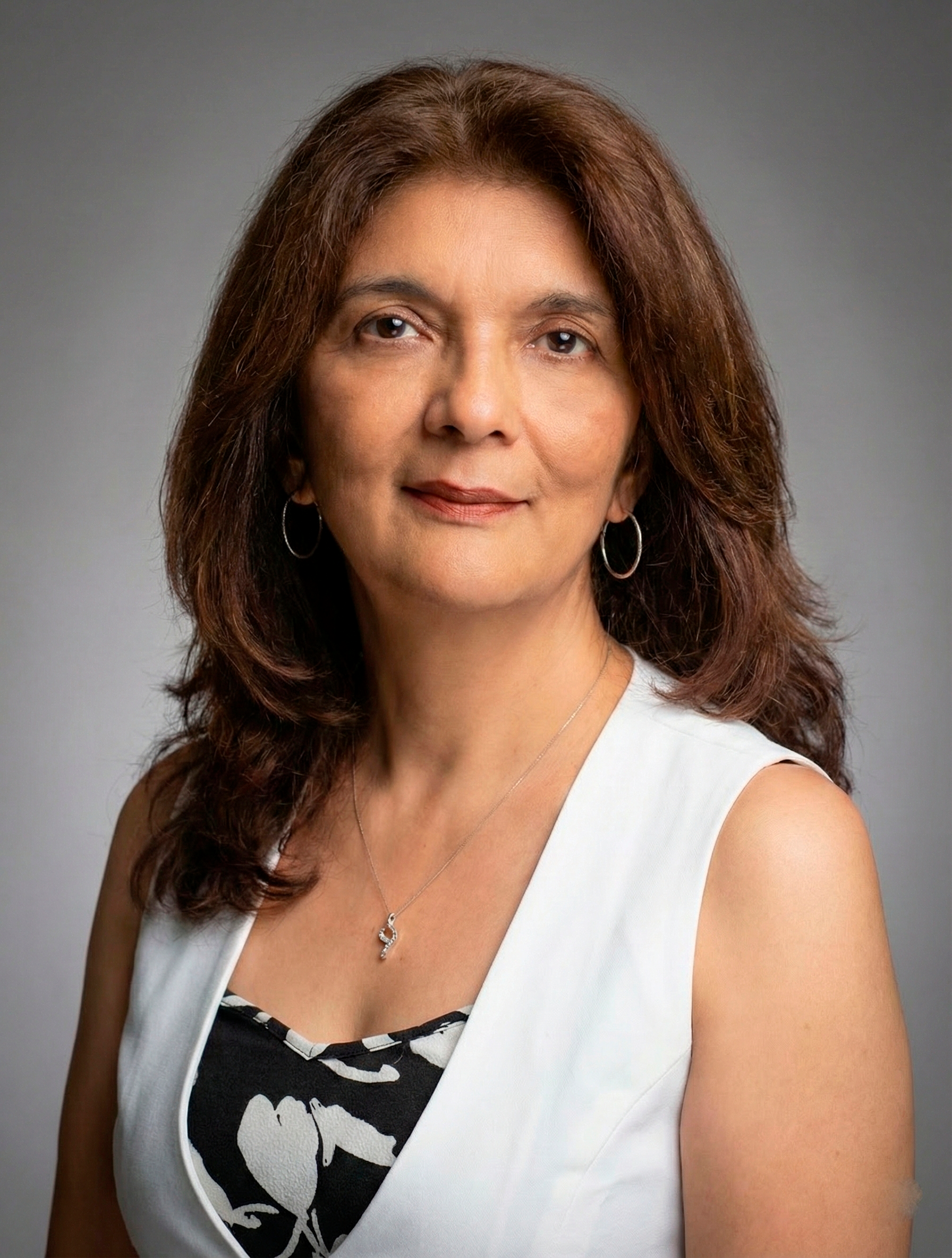
Alejandra Ruiz Vargas is a renowned Colombian community leader and activist based in Canada. As president of ACORN Canada, she has spearheaded grassroots movements advocating for equitable access to housing, tenants’ rights, and social justice for low-income communities. Her leadership has been characterized by a deep connection with the realities of migrants and workers, promoting fairer and more sustainable public policies.
Alejandra has represented the voice of thousands of families before local and provincial governments and has been a spokesperson for national campaigns for economic equity and inclusion. Her work has strengthened civic participation and the empowerment of historically marginalized communities. Since her arrival in Canada, she has turned the migrant experience into a platform for change, demonstrating that organization and solidarity can transform lives and help build a more just country.
The scene is both ordinary and revealing: community organizers hop on and off Toronto’s public transportation to visit at-risk tenants, heat-affected seniors, and families who can’t make ends meet. Among them is Alejandra Ruiz Vargas: in addition to her nine-to-five day as a social worker, she joins her organization’s team and a board of six people in Toronto, another of ten at the national level and a base of more than 186,000 members from coast to coast in convening neighbours’ meetings, drafting letters to elected representatives and planning public actions. In this clearly collective effort, Alejandra moves between individual support and community organizing, driven by a conviction that was born before arriving in Canada: serving is a vocation, but also a method. “When I understood what it could be used for, it was like ecstasy,” she says.
Her story begins in Bogotá, in a social landscape that marked her by contrast. She grew up observing the weight of classism, the invisible line separating southern and northern neighbourhoods, and the different expectations for one and the other families. That discomfort with hierarchies – “we are all human beings,” she stresses – sharpened her sensitivity to injustice. In her youth, she worked in agricultural and coffee projects with a social focus, an experience that brought her closer to community leadership and gave her a language to name what she already intuited: dignity becomes concrete when it is organized.
She immigrated to Canada for love, after meeting her partner online and marrying. She arrived first in an agricultural area; there she saw up close the reality of temporary workers, many from Mexico, living – as she says – in precarious conditions. It was also her own period of adjustment, with a young daughter and a country to learn. She later moved to Toronto, completed a nearly two-year community services program and began working at an organization serving people with mental illness and addictions. Daily contact with those living on the margins changed the map: she discovered a system with deep gaps between what the rules declare and what happens on the street. “There were things that did not coordinate with the Constitution or with what they taught in the courses,” she says. The contrast hurt, but it gave her a route: stop complaining in front of the television and “get into” the problem to try to transform it.
That turn led her to look for a space where volunteering would lead to belonging. She found a grassroots organization in Toronto that works for housing, digital access, tenant protections and other urban causes. At first she volunteered; later she was offered membership status. The word, for her, is key: to belong. “When we don’t belong, we feel like ghosts,” she says. From there, her role grew. She recalls being elected as a local representative, taking on coordination responsibilities and, over the years, reaching a position of national leadership within that network. The structure, however, interests her less for the titles than for the results: “We do not allow ourselves to be knocked down by losses,” she says. “We keep going until we get what we’re looking for.”

The fronts were multiple and very concrete. In housing, her work led her to manage homes for highly marginalized people and to confront a landscape of unaffordable rents, deferred repairs and discriminatory practices. The response was to organize public campaigns. One of them, she explains, recently culminated in a more demanding system of building inspections: if a building does not meet the standards, it receives a visible seal that alerts tenants and the public, something similar to what is seen in restaurants. According to her, reaching that victory took about twenty years of citizen insistence.
Another line of action was access to the internet and essential services. Alejandra recalls that her organization promoted the slogan of “internet for all,” arguing that connectivity now defines who can study, work, look for housing or claim rights. In the same logic of easing the cost of living, she notes that the network she is part of strongly pushed for the reduction of child-care costs to ten dollars a day, a measure that in her view relieves the burden on thousands of working families. And in the financial field, she points to a change that, she says, will come into force in March 2026: the drastic reduction of charges for insufficient funds in bank accounts, from $48 to $10. All this, she insists, starts from listening to those who suffer the problem and turning that pain into a specific, measurable demand with clear interlocutors.
In her memory there are also campaigns that crossed the entire city. She recalls the controversy over a “smart city” project on Toronto’s waterfront. The plan seduced with innovation, data and sensors, but – according to her – offered a minimal quota of affordable housing and sought to occupy public land without appropriate compensation. When her group stepped into that discussion, more than one technocrat was surprised by the solidity of their arguments. “They didn’t imagine that we would have done all that research,” she says. The episode not only strengthened the campaign; it also reaffirmed something she repeats as a mantra: ordinary people, united and well-informed, have more power than they think.
That tension – between those who speak from titles and those who speak from lived experience – is one of her obsessions. “It is easier to listen to those who have power,” she laments. That is why her practice puts the microphone in the hands of the people affected and seeks allies with technical legitimacy when necessary. During heat waves, for example, she saw many elderly people going to the emergency room due to heat-related illness, unable to afford air conditioning. The campaign for cooler homes needed, in addition to neighbourhood voices, the support of those who know health. They called on doctors and nurses, organized a public action in front of the local government headquarters and managed to put the issue on the agenda with evidence and testimony in the same scene.
The advice she gives to young migrants who want to get involved in their community summarises her method. First, listen. “You don’t get to impose ideas,” she says; “you have to sit down with the community and understand what it needs.” Then, translate the problem into institutional language: distinguish whether the jurisdiction is municipal, provincial or federal, so as not to waste energy at the wrong door. Next, choose winnable, timely battles: a municipal campaign during an election, for example, can take advantage of windows of opportunity and public commitments. Finally, weave relevant alliances – “no one wins alone” – and rehearse public appearances that tell the story with clarity and respect.
Her Latin identity is, for her, both fuel and support. She speaks proudly of traits she recognizes in her community of origin: discipline, tenacity, a strong work ethic. “We are very brave,” she says. And she recognizes in her Christian faith a constant source of personal strength in times when structures seem immovable. She does not romanticize migration: she knows about language barriers, non-recognition of credentials, racism and housing prices that, as she describes it, have skyrocketed “almost 100%.” But she refuses victimhood and prefers to highlight the collective agency of those who organize.
The Toronto she sees today is not the one she arrived in. She hears more Spanish on the street, more Latino voices on the subway, more accents converging. She imagines a future in which that presence translates into real representation. “I imagine the Latino community in positions of power,” she says, “sitting at negotiating tables, making laws, especially on immigration.” It is not an identity whim, she clarifies, but the conviction that lived experience enriches public policy. People who have crossed borders, paperwork and grief provide an angle that no report can replace.
Her immediate agenda does not slow down. During the week, her work as a social worker gives her enough flexibility to carry out community tasks: meetings, visits, paperwork. At the same time, she maintains pressure on authorities to fulfil housing promises. She does not recount it as a personal epic, but as part of a larger “we,” which she says already totals more than 186,000 members across Canada. If that number feels overwhelming, she reduces it to a simple formula: belong to transform. For Alejandra, behind every inspected building, every lighter bank bill and every cheaper daycare place, there is a prior story of someone who spoke, someone who listened and many who organized.
The closing, like the beginning, returns to what is essential. Alejandra is not looking for morals; she prefers to hold a sober thread, the one that goes from pain to the turning point and from the turning point to action. “Seeing people without a voice take power is priceless,” she says. She says it with the calm of someone who has learned not to let go of the rope. In her view, belonging is not a label; it is a daily practice that turns indignation into measurable changes and migration into public energy.